


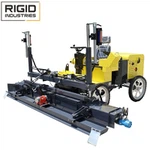
Skid Steer Loader
Our manufacturing plant is located in Shandong, China. We have been doing wheeled and crawler excavators since 1994. Our machines are widely used in engineering, port loading and unloading, municipal construction, gardening, sanitation, water conservancy, agriculture and other fields. We also do OEM service for some large machinery brands, such as BOBCAT China, SINOMACH, etc.

01
Strong Production Capability
We expanded to a full line of skid steers and attachments in 2003, and in 2022 we expanded to compact dump trucks and compact wheel loaders. Our product offering is extensive.
02
Quality Assurance
Our products are strictly inspected before entering the market, and we have also obtained the European CE certificate.
03
Broad Market
We have been exporting construction machinery for 15 years, with target markets being Latin America, Europe, Australia, Russia and North America.
04
Leading Service
We will help customers purchase and store spare parts locally, and when some parts are damaged during the warranty period, we will ship parts to customers free of charge if necessary.


What is Skid Steer Loader
A wheel loader is a piece of heavy machinery used to load and carry materials across a job site. Wheel loaders can haul fine materials like sand or large objects like rock and demolition debris.
Benefits of Skid Steer Loader
Versatility and Flexibility
A skid steer loader is a versatile and flexible machine that can easily handle a variety of construction tasks. They are designed to operate in tight spaces and on uneven terrain, which makes them ideal for construction projects that require maneuverability and flexibility. A skid steer can easily maneuver around obstacles and perform tasks in tight areas where traditional construction equipment cannot operate. In addition, skid steers come with a variety of attachments that enable them to perform different tasks. From digging and excavation to material handling and demolition, there is a skid steer attachment for every job. Some popular attachments include buckets, grapples, augers, trenchers, and backhoes.
Saves Time and Labor
A skid steer loader can save a lot of time and labor costs compared to manual labor and traditional construction equipment. With their speed and flexibility, they can complete tasks faster and more efficiently than manual laborers, reducing the time it takes to complete a project. In addition, a skid steer loader can be operated by one person, eliminating the need for multiple workers to perform tasks. This can reduce labor costs and increase productivity on the job site. For example, a skid steer with a bucket attachment can quickly move and transport materials such as dirt, gravel, and debris, reducing the time and effort required to perform tasks manually.
Cost Savings
Skid steers can offer significant cost savings over traditional construction equipment. They have lower operating costs due to their smaller size and lower fuel consumption. Skid steers also have fewer moving parts, which reduces maintenance costs and downtime. In addition, the versatility and flexibility of a skid steer can reduce the need for multiple specialized machines. This can save on equipment rental or purchase costs. With the right attachments, a skid steer can perform a variety of tasks, eliminating the need for a separate machine for each task. Skid steers can reduce labor costs by increasing efficiency and productivity. Labor costs can be reduced with faster task completion and a single operator who can perform multiple tasks.
Safety
Skid steers are designed with safety features to protect the operator and others on the jobsite. They have roll cages and seat belts to protect the operator in the event of an accident. In addition, the operator has a good view of the construction site and controls the machine in a safely protected area. Skid steers reduce the risk of injury by providing a safer alternative to manual labor and traditional construction equipment. With proper training and safety measures, a skid steer can be a safe and efficient addition to any construction project.
Environmentally Friendly
Skid steers are more environmentally friendly than traditional construction equipment. They reduce fuel consumption and emissions, helping to reduce environmental impact. Additionally, their low noise levels make them ideal for working in urban areas and near residential areas. Skid steers have a smaller footprint than traditional construction equipment, reducing the impact on the job site and surrounding areas. They can be used in tight spaces and on uneven terrain, reducing the need for additional leveling and preparation work. This can reduce the amount of material used, as well as the fuel and emissions associated with transporting those materials.
Parts of Skid Steer Loader
Engine
Skid loader usually uses diesel engine, which is mainly composed of intake system, fuel system, exhaust system, lubrication system and other parts. In the work of skid loader, the engine plays an important role in providing power, so its performance and fuel consumption are factors that need to be considered.
01
Hydraulic System
The hydraulic system is one of the key parts of skid loader, mainly composed of fuel tank, hydraulic pump, hydraulic cylinder, control valve, working device and so on. The function of hydraulic system is to convert the power provided by the engine into the working power of the machine, so as to realize the control of loading, transportation and other operations.
02
Transmission System
The transmission system is an important part of skid loader, mainly composed of gearbox, drive shaft, transmission shaft, gear, torque converter and so on. Its function is to transmit the power of the engine to the wheels, so as to drive the skid loader to operate. The design and performance of the transmission system affect its maneuverability, fuel consumption, driving stability and other aspects.
03
Travel System
The travel system is one of the core parts of skid loader, mainly composed of travel wheels, crawler, suspension system and so on. Generally speaking, skid steer loaders adopt wheeled structures or crawler structures to ensure their good driving performance and off-road capabilities.
04
Working Device
The working device is the main working part of the skid steer loader, mainly composed of bucket, fork, bulldozer, etc. Its main function is to load, move, unload and other operations of the required materials according to specific needs. In actual work, the performance and stability of the working device have an important impact on the working quality and efficiency of the skid steer loader.
05
Applications of Skid Steer Loader
Demolition
A skid steer is great for both indoor and outdoor demolition projects. With demolition shears, a skid steer can help remove flooring, concrete, drywall, and other materials. Because of its compact size and precision, a skid steer is especially useful for demolition projects in tight spaces, such as when you're demolishing a house in a neighborhood with other houses nearby.
Roadwork
A skid steer can perform road construction and maintenance tasks. You can attach a cement mixer or pavement milling machine to a skid steer and use other attachments to perform tasks like demolition, grading, paving, and patching.
Snow and Debris Removal
You can use the bucket attachment on a skid steer to remove snow and other debris, such as brush. If you use your skid steer for large-scale snow removal, you can also get a snowblower or snow shovel attachment.
Digging, Excavation, and Trenching
A skid steer is great for earthmoving tasks like digging, trenching, and excavation. You can use a variety of attachments to accomplish these tasks, depending on your specific needs. Some examples include backhoes, augers, trenchers, and wheel saws. With the right attachments, a skid steer can dig up anything from the entire foundation of a building to a narrow porthole.
Grading and Backfilling
You can also use a skid steer to fill holes, level the ground, and aerate the ground. You can use a bucket for these tasks, but a rake attachment or a leveling bar works better when leveling the ground. With these attachments, you can also scoop up rocks while leveling the ground without leaving a large trench. For jobs that are lower to the ground, you can use a radial-lift skid steer instead of a vertical lift.
Loading
A skid steer can help you move equipment and materials around the job site with a bucket attachment. If you need to lift materials, you may want to consider a vertical-lift instead of a radial-lift skid steer, as these models can lift heavier loads and achieve a higher reach.
Mowing
You may be surprised to know that you can also use a skid steer to mow the grass. With a rotary mower, you can cut down tall grass and other vegetation to efficiently clear an area. You can even cut down some smaller trees. Since skid-steer loaders are zero-turn, they can provide the precision you need for mowing, but with more versatility than a typical riding mower.
Landscaping
Some of the tasks we’ve already looked at are useful for landscaping. Other landscaping tasks you can accomplish with a skid-steer loader include grinding up stumps, chipping wood, and tilling. You can even use a cultivator attachment to help mix compost or fertilizer into the soil. With a bucket, you can transport materials like gravel or mulch, or landscaping tools that you would otherwise have to push with a wheelbarrow.
Agricultural Work
Skid-steer loaders are also very useful for farm work. You can use them for tilling and the other tasks we’ve already mentioned. In addition, you can use a bucket attachment to clean out barns and stables. You can even purchase a bale attachment to move hay bales—a task that can otherwise be very labor-intensive.
Material Handling
Skid-steer loaders are also useful in warehouses. With a forklift attachment, you can move pallets and other materials. If you want a skid-steer loader to lift materials and place them in a warehouse, you’ll want to choose a vertical lift instead of a radial lift option.
How to Choose Skid Steer Loader


Rated Operating Capacity
The rated operating capacity of a skid steer loader refers to the load or weight it can carry without reaching a critical point or causing a dangerous load failure. In simpler terms, it is the weight a skid steer can lift. Rated operating capacity is not to be confused with operating weight, which refers to the weight of the equipment itself with a full tank of fuel and an average-sized machine operator inside. Rated operating capacity is critical in determining the right skid steer loader.
Size and Weight
Depending on your core application, the size of skid steer you need will vary. A small, medium, or large skid steer loader frame will meet the needs while maintaining mobility and controllability. Frames are defined by the rated operating capacity and horsepower of the equipment. Frame sizes and weights fall into three general categories:
• Large Frame: 2,200+ lbs - Lowest rated operating capacity, at least 70 hp.
• Medium Frame: 1,750-2,200 lbs - Rated operating capacity, 50-70 hp.
• Small frame: 1,550-1,750 lbs. - rated operating capacity, approximately 50 hp.
There are a variety of sizes available, so you'll want to consider your options carefully when choosing a skid steer for your application. For example, here are some things you can keep in mind:
• Operating capacity: In most cases, the operating capacity of a skid steer increases as weight and size increase. If you need a higher operating capacity, you may need a larger skid steer to ensure it can complete the necessary tasks on your job site.
• Budget: The project budget will significantly impact the size of skid steer you can afford. You can choose the smallest skid steer that still meets your needs so that your project stays within budget. For example, if your project requires a skid steer with a 2,000 lbs operating capacity, you can accomplish the task with a medium frame skid steer and not necessarily a large frame skid steer.
• Jobsite size and layout: The maneuverability of your jobsite will have a significant impact on which skid steer you choose. If your jobsite has tight spaces and many obstructions, a smaller skid steer may be the best choice. However, if your jobsite has wide open spaces and requires a higher working capacity or lifting capability, a larger skid steer will be a better fit for your jobsite.
Terrain
Consider the terrain of the jobsite or area where you will be working. Generally speaking, the wheels of a skid steer perform best on smooth, flat, and relatively firm surfaces. They do not perform as well on muddy or continuously rocky terrain. This is a rule of thumb regardless of the frame, rated capacity, lift type, or operating weight.
Attachments
Attachments will be the next important factor in your skid steer purchase. This requires a little foresight, as attachments are any additional tools or extensions that you attach to your skid steer to perform a specific task. Attachments are a cost-effective alternative to purchasing or renting additional disposable machinery, allowing you to perform a variety of applications from the convenience of your skid steer loader cab. However, it is important to note that skid steer attachments require a specific amount of power that only the selected machine can produce through its hydraulic flow.
Lift Type
Skid steers come in two different lift configurations: radial or vertical. This is the last major factor you need to consider when choosing a skid steer for your application, as the two types have different limitations:
Vertical lifts are designed for higher or taller load movements. They also have a higher midpoint lift cycle range, which means they can get into spaces that other equipment can’t.
The radial lift design is more compact and simpler than the vertical one. It has fewer internal moving parts and is ideal for moving loads at or near the ground, such as digging through dirt or shifting terrain.
Note that lift design is not size specific. You’ll find small, medium, and large frame skid steers equipped with each lift type. It’s more important to think of lift capacity as part of how you need to move your load, rather than pegging it to size. Industry experts recommend choosing a radial machine if you perform applications at or below eye level, and vertical if your load movements are primarily above eye level.
Project Environment
Your project requirements will play a central role when choosing a skid steer. Some basic factors about your job site will help you choose the right skid steer, including:
• Project Type: Your typical project types and requirements will influence the type of skid steer that is best suited for your job site. For example, construction sites typically require larger skid steers to meet lifting and power requirements, while landscaping companies typically use smaller skid steers because they are more maneuverable than larger machines.
• Work Environment: Another factor to consider is the work environment. If you work on soft or muddy ground or uneven terrain, consider buying a compact track loader. However, you may also choose a wheeled skid steer if working on a hard, flat surface. You should also consider your work environment when choosing a skid steer with different features. For example, if your operators often work in hot temperatures, you may want to choose a skid steer with air conditioning and an enclosed cab.
• Frequency of Use: How often you need a skid steer will help you determine whether you need to buy a new or used skid steer, or go with a rental vehicle. If you use a skid steer for every project you undertake and it is one of the primary machines required to achieve your project goals, then purchasing a new skid steer may be the best investment. If you use a skid steer frequently but it is not always necessary for your projects, you may want to consider purchasing a high-quality used machine. Minimal use may be best suited for leasing.
How to Maintain Skid Steer Loader

Routine Maintenance
Basic daily inspections are essential to keeping tabs on the health of your equipment. Before you start your skid steer, walk around it and inspect it for signs of wear or damage. Walking around is also a great opportunity to assess your surroundings and map out any obstacles in your intended path. Inspect the front of your skid steer, clear any debris from the attachments, and make sure hoses and lines are secure and leak-free. You must also check the arms and pivot points to make sure they are thoroughly lubricated—ideally, you should oil your skid steer after every use. Check the tires and tracks, and make any necessary pressure or tension adjustments. You’ll also want to hop into the cab and quickly check all safety features, including the display panel, horn, seatbelts, and any backup alarms. After that, walk behind the skid steer and open the tailgate to inspect the engine and system components, then check all fluid levels and refill as needed.
Fluid Maintenance
Maintaining the correct fluid levels keeps your skid steer running smoothly. Engine oil, hydraulic oil, and coolant should all be maintained according to the manufacturer’s guidelines to prevent overheating and wear damage. These fluids should also be changed regularly and kept at a consistent temperature. If you notice excessive fluid loss, you may have a leaky hose or a loose fitting, which should be fixed immediately to avoid costly damage. When checking the fluid, make sure the loader arm is down so that all the hydraulic fluid flows back to the tank to get an accurate reading.
Tire and Track Care
One of the most important maintenance tasks for a skid steer is to care for the tires or tracks, as they naturally experience the most wear over time. If your skid steer has tires, make sure they are properly inflated and at the correct pressure level to improve handling and reduce wear. Of course, tire pressure only applies to tires that are not filled with foam. Because skid steer tires are so thick, it is difficult to notice pressure changes with a visual inspection alone, so they should be checked regularly with a pressure gauge. Follow the operator's manual to get the best pressure numbers to avoid over-inflating or under-inflating the tires.
Cleanliness
Keeping your skid steer clean can also extend its life. In addition to removing any debris from the body, cleaning the windows will allow you to do your job more efficiently. Clean windows provide ample visibility and clear sight lines, increasing operator efficiency and improving job safety. It is also important to clean the engine compartment regularly, especially when working in an environment with a lot of debris. Dirt and dust can quickly build up on the radiator and other system components, causing the engine to overheat and affecting electrical connections.
Schedule Regular Service Appointments
Regular service appointments are vital to the condition of your skid steer loader. Professional companies that service skid steers have specialized tools and trained technicians who know what to look for and how to provide the best care for your equipment. With their many resources, they can complete maintenance tasks quickly, saving you time and preventing major problems. Skid steers are relatively inexpensive to maintain. You will save a lot of money in the long run by performing regular maintenance and avoiding costly repairs on your skid steer loader.
