


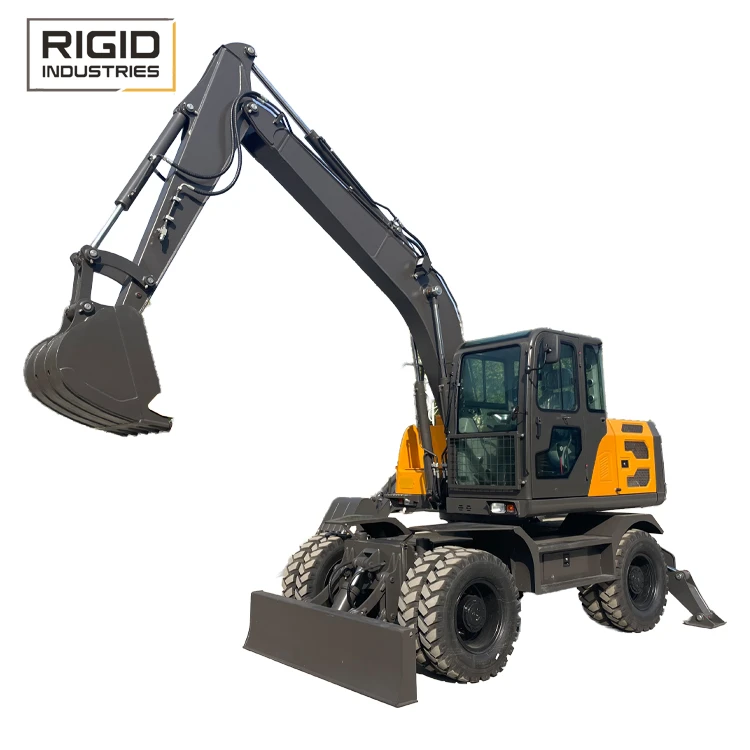


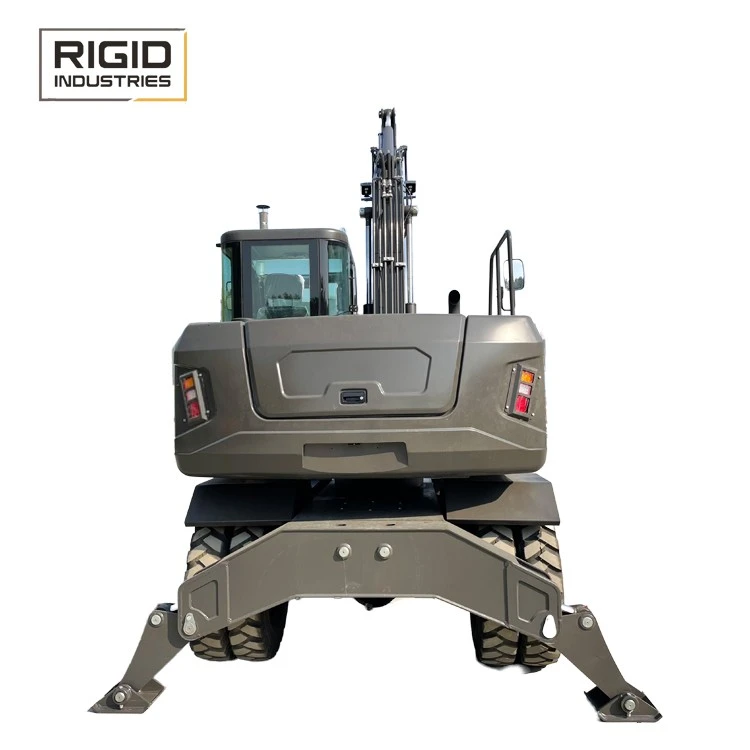

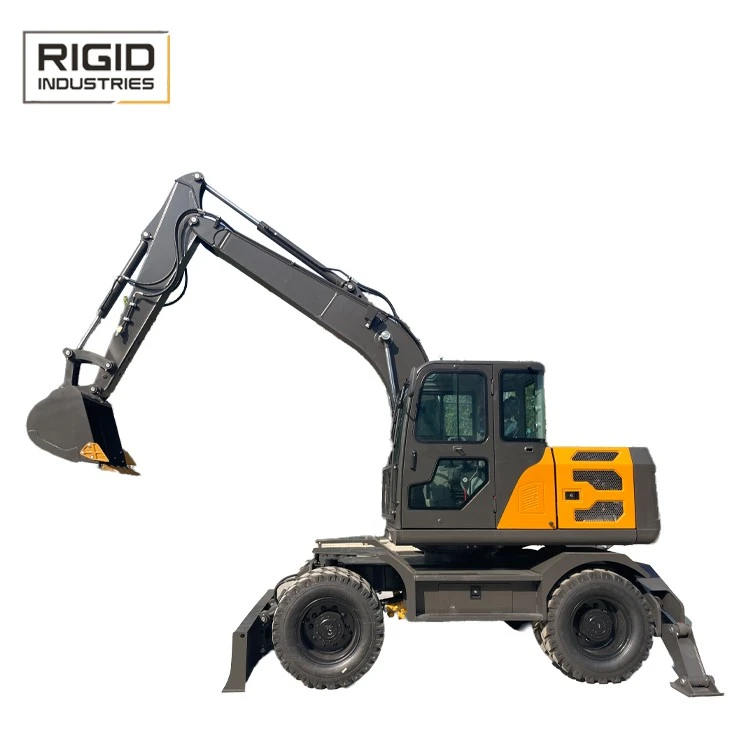
12 Ton Wheel Excavator
Engine Brand: Yuchai
Engine Type: Diesel
Cab Available: Yes
12 Ton Micro Wheeled Excavator (RW120W)
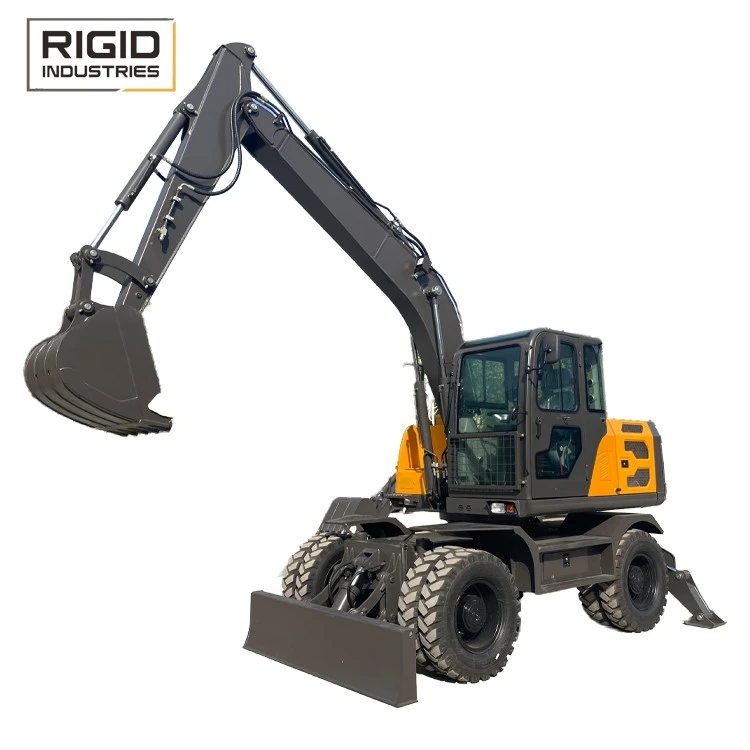
Product Overview
If you're buying your first wheeled excavator or adding a compact unit to a small fleet, this 12 ton model is built specifically for buyers who need reliable digging capability without the size, cost and complexity of larger machines. At 2050mm wide with a 4.8m turning radius, it squeezes through residential gateways, farm lanes and tight property access points that would stop a 15-ton model cold.
The Yanmar 4TNV88 engine delivers dependable power with minimal fuel burn - around 5–7 liters per hour on typical jobs - and pairs with a simple gear-pump hydraulic system that's easy to maintain and repair. The 0.45m³ bucket handles 6-meter maximum digging depth for most small foundation, drainage and landscaping work, and road travel speed reaches 25 km/h. Because it weighs only 12 tons, you can haul it on a standard trailer behind a medium truck - no expensive lowbed transport needed. It's the most practical entry point into wheeled excavator ownership for small contractors, farm operations and rental yards serving residential customers.
Product Parameter (specification)
|
Model |
RE120W Yuchai 4KD100, 74kw/2,200rmp |
||
|
Type |
Direct injection, water cooled, Super charged |
||
|
Overall Length |
mm |
7,285 |
|
Overall Width |
mm |
2,270 |
|
Overall Height |
mm |
3,010 |
|
Ground Clearance |
mm |
335 |
|
Cabin Height |
mm |
3,010 |
|
Axle Base |
mm |
2,500 |
|
Tread |
mm |
1,250 |
|
Operation Weight |
kg |
12,000 |
|
Bucket Capacity |
m3 |
0.4 |
|
Min. Swing Radius |
mm |
2,160 |
|
Max. Digging Radius |
mm |
7,580 |
|
Max. Digging Depth |
mm |
4,330 |
|
Max. Vertical Digging Depth |
mm |
3,950 |
|
Max. Digging Height |
mm |
8,300 |
|
Max. Dumping Height |
mm |
6,380 |
|
Max. Dozer Cutting Distance |
mm |
70 |
|
Max. Dozer Lifting Distance |
mm |
385 |
|
Tail Swing Radius |
mm |
2,160 |
|
System Pressure |
MPa |
35 |
Key Design & Performance Advantages
Smallest Footprint in the Wheeled Range
At only 2050mm wide and 2900mm tall, this machine fits through single-width driveway gates, narrow farm lanes and even some commercial building entrances. The 4.8m turning radius lets it spin around in tight backyard spaces where larger excavators would need multiple forward-and-back maneuvers. If access is your number one constraint, this is the model you want.
Lowest Operating Cost in the Lineup
The Yanmar 4TNV88 engine burns just 5–7 liters per hour under typical working conditions - the lowest fuel consumption of any wheel excavator we offer. Combined with lower tire replacement costs, simpler hydraulic components and cheaper routine maintenance, it costs significantly less to own and operate per hour than any larger model.
Easy to Tow, Easy to Transport
At 12 tons operating weight, this machine can be towed behind a medium-duty truck or larger pickup with the right trailer setup - no heavy lowbed trailer or specialized transport truck required. This makes it practical for small businesses that don't already own heavy hauling equipment, and it opens up more job opportunities without adding transport overhead.
Entry-Level Price Point for New Operators
As our most budget-friendly wheeled excavator, it lowers the barrier to entry for small landscaping companies, farm operations and first-time equipment buyers. The simple, straightforward control layout is also easier for less experienced operators to learn, reducing training time and making it a good first excavator purchase.


First-Time Buyer Guidance
Buying your first excavator is a big decision, and getting the size right matters more than getting the biggest machine you can afford. Here is what first-time buyers should know about choosing a 12 ton wheeled model.
Is 12 tons the right starting size?
For most small landscaping companies, farm operations and entry-level contractors, yes. This size handles the majority of small digging jobs - foundations, drainage, landscaping, utility trenches - without the higher purchase price and operating costs of larger excavators. If your typical jobs stay under 5 meters deep and you mostly work on residential or small commercial sites, 12 tons gives you enough capacity without paying for digging power you will not use.
What to look for on a first excavator purchase
Simplicity over features: A straightforward hydraulic system and simple controls mean less to go wrong and faster operator training. You do not need every advanced feature on your first machine.
Parts availability: Choose an engine brand with established service networks in your region. Yanmar engines have broad global support, which matters when you need replacement parts quickly.
Transport practicality: If you do not own heavy hauling equipment, a machine that tows behind a standard truck saves significant money on every job move.
Resale value: Popular sizes in the 12–15 ton range hold their value well because there is steady demand from small contractors and rental yards.
Common mistakes first-time buyers make
Buying too big is the number one error. New operators often assume more tons means more capability, but if your jobs do not require that extra size, you are just paying more upfront, burning more fuel and struggling with access on tighter sites. Buy for the work you actually do today, not the work you hope to get next year. You can always step up to a larger machine later as your business grows.
Read our complete first-time excavator buyer guide for more tips
Order & Shipping Details
Payment arrangements: Telegraphic transfer with 30% deposit and 70% balance prior to shipment, or irrevocable letter of credit payable at sight - whichever works better for your import process.
Minimum quantity: Single units available. No bulk purchase requirement, which makes this size accessible for small businesses and individual owner-operators looking to add one machine to their fleet.
Production lead time: Standard units ship within 25–35 days from order confirmation. Custom paint colors, branding or attachment bundles add approximately 7–10 days to the build schedule.
Customization options: Factory paint color matching, company logo application and pre-selected attachment packages are all available. We can also configure cabin options based on your regional climate requirements.
Container & transport details: One unit fits comfortably in a 40ft high-cube container with standard fumigated wooden packaging and anti-rust wrapping. At only 12 tons, this machine can also be transported on a standard flatbed trailer behind a medium truck in most countries - no specialized lowbed trailer required for local transport after delivery.
Shipping terms available: FOB Dalian, CFR and CIF are all standard options. We can also arrange door-to-door delivery through our freight partners if you prefer a fully handled import process.
Frequently Asked Questions
Will this 12 ton model fit through a standard residential gate?
Yes, in most cases. At 2050mm wide, it passes through most double-width driveway gates and many single-width commercial entrances. You will want to measure your narrowest access point before purchasing, but this is the narrowest wheel excavator in our range - built specifically for sites with limited entry space.
Can I tow it with a regular work truck?
Generally yes. At 12 tons operating weight, it can be hauled on a proper flatbed trailer behind a medium-duty truck in most countries. You will need to check your local towing regulations and make sure your truck and trailer are rated for the weight, but you will not need a specialized lowbed trailer like you would with larger excavators.
How does 12 ton compare to the 15 ton model for small jobs?
The 12 ton model is narrower, lighter, more fuel efficient and lower cost - built specifically for the tightest access points and smallest job sites. The 15 ton model adds more digging power, deeper reach and a larger bucket for slightly bigger projects. If access is your primary concern, go with 12 ton. If you need a bit more capacity and have room to work, the 15 ton is the step up.
Is this size suitable for farm and agricultural work?
Very much so. It handles most common farm earthmoving tasks - irrigation ditches, small building foundations, manure pits, fence post holes and general site cleanup. The rubber tires do not damage farm roads or field edges, and the machine is light enough to work in softer ground conditions without sinking.
How much fuel does it burn in a typical workday?
Figure on 5–7 liters per hour under normal working conditions, which works out to roughly 40–56 liters for a full eight-hour day. That is the lowest fuel consumption across our entire wheel excavator lineup, making it very economical for small businesses and part-time use.
I am new to excavators - is this model easy to learn on?
Yes. The control layout keeps things simple and intuitive, and the gear-pump hydraulic system delivers smooth, predictable response that newer operators find easier to master. Many first-time excavator buyers start with this size because it is forgiving to operate and does not overwhelm less experienced drivers.
Real Photos


OEM/ODM Customization Support (Wholesale-Friendly)
- Full Machine Customization: Color, paint, logo, and nameplate can be customized to match your brand.
- Brand Registration Assistance: We support brand registration and provide authorization documentation.
- Configuration Flexibility: Adjustments based on drawings or market feedback are available.
- Technical Compliance: Emission and control systems can be tailored to regional standards.
This is our packing process to ensure safe delivery.
Before loading:
- Wash and repaint the vehicle.
- Measure the equipment's dimensions (length x width x height), weight, and center of gravity.
- Inspect vulnerable parts (such as hydraulic hoses, instrument panel, and precision components) and mark protective points.
- Determine whether the equipment needs to be disassembled (e.g., removing the boom, tires, or cab to save space).
Loading preparation:
- Cushioning materials: Foam board, wood strips, air cushion film.
- Reinforcement materials: Wire rope, nylon strapping, angle steel, wooden planks.
- Lay moisture-proof wooden planks inside the container.
Loading:
- Use a forklift/crane to place the equipment on the wooden planks, with the center of gravity near the center of the container.
- Secure the base using specialized fasteners (such as twist locks, anchor bolts) or welded L-brackets.
- Maintain a distance of 10 cm or more between the equipment and the container wall, using wooden planks to prevent sway.
- Long overhangs (such as excavator arms) require additional support frames to prevent deformation.
- Wire rope + tensioner for diagonal securing.
After loading:
Each step is photographed and sent to the customer.
FAQ
Hot Tags: 12 ton wheel excavator, China 12 ton wheel excavator manufacturers, suppliers, factory, wheel excavator with wide track, wheel excavator troubleshooting, wheel excavator operation tips, wheel excavator features, wheel excavator application, wheel excavator operation manual
Previous
8.5 Ton Wheel ExcavatorYou Might Also Like


Send Inquiry