

Hey there! As a supplier of mini crawler cranes, I often get asked about the differences between mini crawler cranes and rough - terrain cranes. So, I thought I'd write this blog to break it all down for you.
Let's start with the basics. A mini crawler crane is, well, mini. It's designed to be compact and highly maneuverable. These cranes are perfect for tight spaces where larger cranes just can't fit. You know those construction sites in the middle of a busy city, with buildings and obstacles all around? That's where a mini crawler crane shines. On the other hand, a rough - terrain crane is built for, you guessed it, rough terrains. It's bigger and more powerful, and it's made to handle uneven ground, mud, and other challenging outdoor conditions.
Size and Mobility
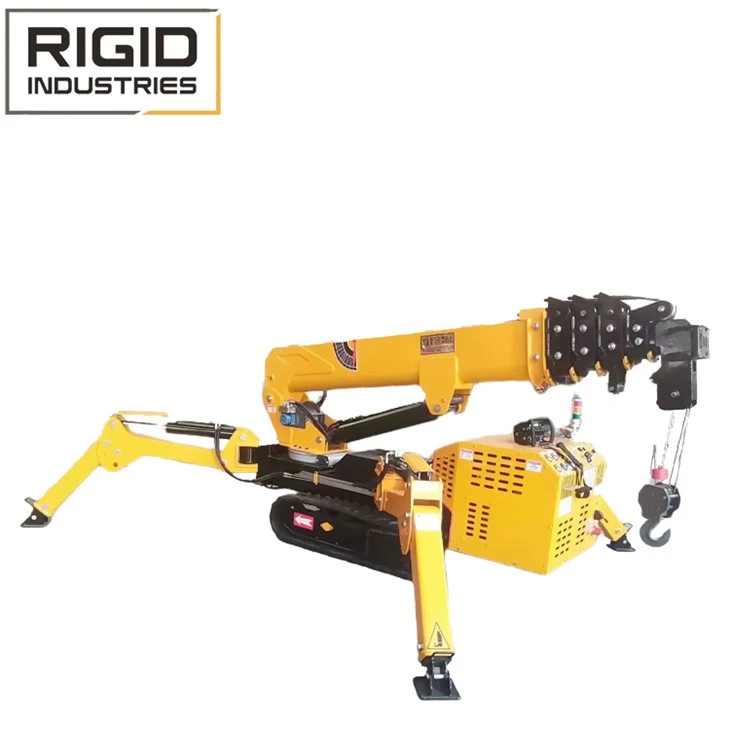
One of the most obvious differences is the size. Mini crawler cranes are small in stature. They can easily be transported on a small trailer or even in the back of a large truck. This makes them super convenient for quick deployments. For example, if you have a small renovation project in a residential area, you can get a mini crawler crane to the site in no time.

Rough - terrain cranes, however, are much larger. They usually have big tires and a large chassis to support their weight and the heavy loads they can carry. Moving a rough - terrain crane from one site to another often requires a specialized transport vehicle. But don't let their size fool you. They're still pretty mobile on rough ground. Their large tires and powerful engines allow them to drive over rocks, through mud, and up steep slopes.
Lifting Capacity
When it comes to lifting capacity, rough - terrain cranes take the lead. These beasts can lift heavy loads, sometimes up to several dozen tons. They're commonly used in large - scale construction projects like building skyscrapers or bridges. You need a lot of power to lift steel beams and pre - fabricated building components to great heights, and that's where rough - terrain cranes come in.
Mini crawler cranes, while not as powerful as rough - terrain cranes, still have a decent lifting capacity. They can handle loads ranging from a few hundred kilograms to a few tons. For instance, our 3t Mini Spider Crane is great for lifting smaller items like air - conditioning units or small construction materials. It's all about finding the right balance between size and lifting power for your specific project.
Versatility
Mini crawler cranes are incredibly versatile. They can be used in a wide variety of applications. Because of their small size, they can be used indoors as well as outdoors. You can use them in warehouses to move heavy pallets, in factories for equipment installation, or in historical buildings for restoration work where space is limited.
Rough - terrain cranes, while mainly used outdoors, are also quite versatile in their own right. They can be equipped with different types of attachments like hooks, winches, and booms to perform various tasks. Whether it's lifting, pulling, or placing heavy objects, a rough - terrain crane can usually get the job done on a large - scale outdoor site.
Stability
Stability is crucial when operating a crane. Mini crawler cranes have a low center of gravity, which gives them good stability, especially on flat surfaces. Their crawler tracks also provide a wide base of support, which helps prevent tipping over. This makes them safe to use in areas where space is limited and there's not much room for error.
Rough - terrain cranes, with their large chassis and heavy counterweights, are also very stable. Their design allows them to handle heavy loads on uneven ground without toppling over. However, they do require more space to set up and operate safely compared to mini crawler cranes.
Cost
Cost is always a factor when choosing a crane. Mini crawler cranes are generally more affordable than rough - terrain cranes. They're cheaper to purchase, and their operating costs are also lower. They consume less fuel, and maintenance is usually less complicated. This makes them a great option for small businesses or projects with a tight budget.
Rough - terrain cranes, being larger and more powerful, come with a higher price tag. The initial purchase cost is significant, and they also require more expensive maintenance and fuel. But if you have a large - scale project that requires heavy lifting, the investment in a rough - terrain crane may be worth it in the long run.
Which One Should You Choose?
So, which crane is right for you? It really depends on your project requirements. If you're working in a small, confined space and don't need to lift extremely heavy loads, a mini crawler crane is probably your best bet. Our 10t Crawler Crane and 8t Crawler Crane are great options for medium - sized projects that require a bit more lifting power but still need the flexibility of a crawler crane.
On the other hand, if you're working on a large outdoor construction site with rough terrain and need to lift heavy loads, a rough - terrain crane is the way to go. It can handle the tough conditions and get the job done efficiently.
If you're still not sure which crane is right for your project, don't hesitate to reach out. We're here to help you make the best decision based on your specific needs. Whether you're a contractor, a builder, or someone involved in a construction project, we can provide you with the right crane solution.
In conclusion, both mini crawler cranes and rough - terrain cranes have their own unique advantages. By understanding the differences between them, you can choose the crane that will work best for your project. So, if you're in the market for a crane, give us a shout, and let's talk about how we can help you with your lifting needs.
References
- Construction Equipment Handbook
- Crane Manufacturer's Association Publications


