

Hey there! As a supplier of mini spider cranes, I often get asked how these nifty machines' telescopic booms work. So, I thought I'd break it down for you in this blog post.
First off, let's talk about what a mini spider crane is. It's a compact and highly maneuverable crane that's perfect for working in tight spaces. The telescopic boom is one of its most important features. It allows the crane to reach different heights and distances, making it super versatile.
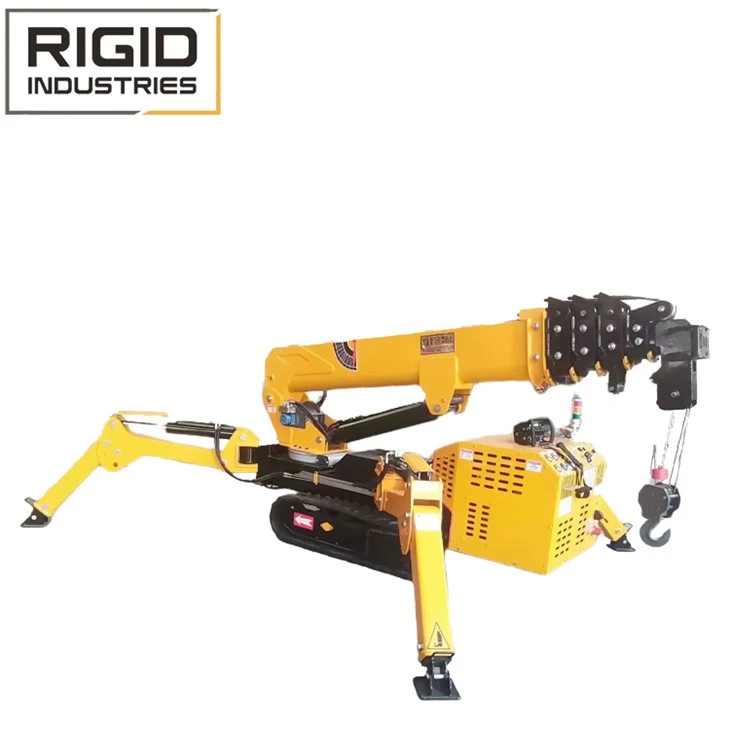

How the Telescopic Boom is Structured
A mini spider crane's telescopic boom is made up of several sections, usually two to four. These sections are designed to fit inside each other like a set of nesting dolls. The innermost section is the smallest, and each outer section is larger and can slide over the one inside it.
At the base of the boom, there's a hydraulic system. This is the powerhouse that makes the boom move. Hydraulic cylinders are attached to each section of the boom. These cylinders are like big, strong muscles that push or pull the sections of the boom in and out.
The Hydraulic Power
The hydraulic system uses a special fluid, usually hydraulic oil. When the operator wants to extend the boom, they use controls in the crane's cab. These controls send a signal to a hydraulic pump. The pump then pressurizes the hydraulic oil and sends it into the cylinders.
As the pressurized oil enters the cylinders, it causes the pistons inside the cylinders to move. The pistons are connected to the sections of the boom. When the pistons move, they push or pull the boom sections, making the boom extend or retract.
For example, when you want to lift a load to a higher position, you extend the boom. The hydraulic cylinders push the innermost section out first. Then, depending on how high you need to go, the other sections can be extended one by one. The process is the reverse when you want to retract the boom. The hydraulic oil is released from the cylinders, and the pistons move back, pulling the boom sections back into their nested position.
Safety Features
Safety is a big deal when it comes to operating a mini spider crane with a telescopic boom. There are several built - in safety features. One of them is a limit switch. This switch is installed on each section of the boom. It detects when the section has reached its maximum or minimum extension. Once the limit is reached, the switch sends a signal to stop the hydraulic system from further extending or retracting the boom. This prevents over - extension or over - retraction, which could cause damage to the boom or the crane.
Another safety feature is the load moment indicator (LMI). This device keeps track of the weight of the load, the length of the extended boom, and the angle of the boom. It calculates the moment (a measure related to the force and distance) that the load creates on the crane. If the moment exceeds the safe operating limit of the crane, the LMI will send an alarm to the operator, and in some cases, it can even automatically prevent further movement of the boom or the load.
Advantages of a Telescopic Boom
The telescopic boom on a mini spider crane offers several advantages. First, it's incredibly flexible. You can quickly adjust the reach of the boom depending on the job requirements. Whether you're working in a small room and need a short reach or outside and need to lift a load to a higher floor, the telescopic boom can be adjusted accordingly.
Second, it saves time. You don't have to spend a lot of time setting up different types of crane jibs or booms. You just extend or retract the telescopic boom, and you're ready to go. This can be a huge advantage on job sites where time is of the essence.
Different Models for Different Needs
We offer a variety of mini spider cranes with different capabilities. For example, our 3t Mini Spider Crane is great for light - duty jobs in confined spaces. It has a telescopic boom that can reach a decent height and distance, making it suitable for tasks like installing small air - conditioning units or lifting building materials in a narrow alley.
If you need more lifting power, we also have larger models. Our 8t Crawler Crane and 10t Crawler Crane are more heavy - duty options. They have more powerful hydraulic systems and longer telescopic booms, allowing them to handle larger loads at greater heights and distances.
Maintenance of the Telescopic Boom
Proper maintenance of the telescopic boom is crucial to ensure its long - term performance and safety. Regularly inspect the boom for any signs of wear and tear, such as cracks, dents, or loose bolts. Check the hydraulic hoses for leaks and make sure the hydraulic fluid is at the right level and in good condition.
Lubricate the moving parts of the boom, such as the slides and joints, to reduce friction and prevent premature wear. Follow the manufacturer's recommended maintenance schedule for more in - depth inspections and servicing, like checking the cylinders for proper operation and calibrating the safety sensors.
Conclusion
So, there you have it! That's how a mini spider crane's telescopic boom works. It's a combination of smart engineering, powerful hydraulics, and reliable safety features. Whether you're a small contractor working on tight urban sites or a larger construction company needing a versatile lifting solution, our mini spider cranes with telescopic booms can meet your needs.
If you're interested in learning more about our products or discussing a potential purchase, don't hesitate to reach out. We're here to help you find the perfect crane for your specific job requirements.
References
- Crane manufacturer's operation and maintenance manuals
- Industry standards for mobile and crawler crane safety and operation


